
hirepentester.com

If you’re planning to switch your career to penetration testing, which can be a fascinating career for you, before moving to a penetration testing role, you have to make sure which tool you are going to use for penetration testing in 2026.

HirePentester is a source of information platform where you can learn about multiple techniques that will work even in 2026 or 2027, whenever you are here. Whenever you move to API penetration testing, you have to remember one thing about APIs: what are the types of APIs? But when you get ready for the types of APIs, then you have to understand the architecture of different types of APIs and how they work.

Three Common Types of APIs

Here are three common types of APIs widely used across different sectors:

  1. REST API
    REST (Representational State Transfer) APIs use HTTP methods for communication and are popular due to their simplicity, scalability, and statelessness.
  2. SOAP API
    SOAP (Simple Object Access Protocol) APIs use XML-based messaging and are known for their strong standards and security features, making them suitable for enterprise environments.
  3. GraphQL API
    GraphQL APIs allow clients to request exactly the data they need, making them flexible and efficient for complex data queries.

These three types—REST, SOAP, and GraphQL—are the most commonly encountered in API development and penetration testing.
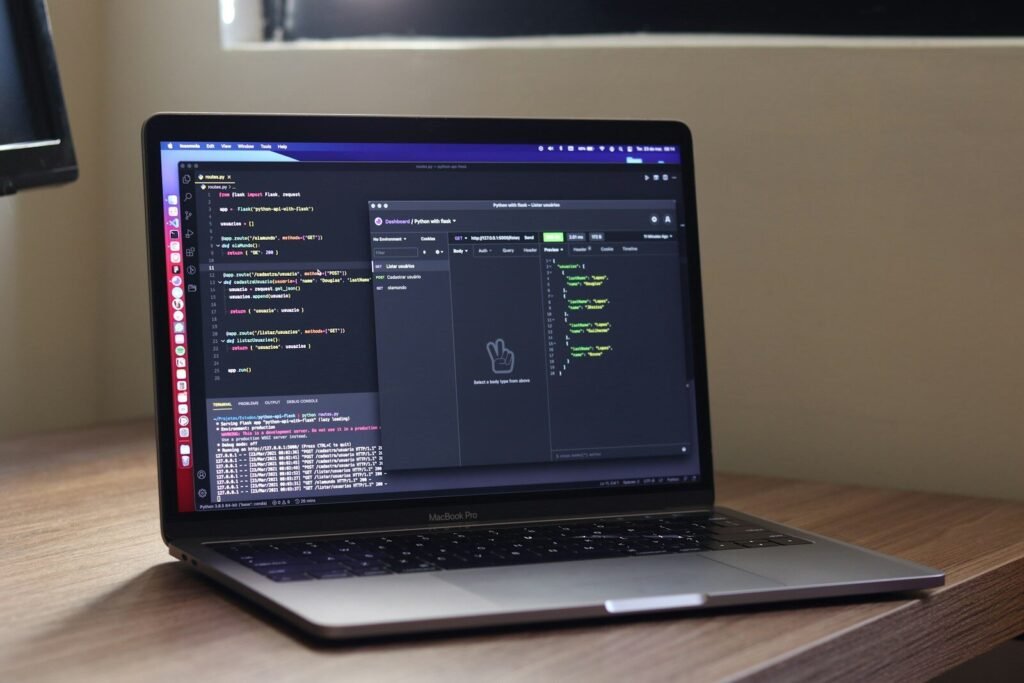
a laptop computer sitting on top of a wooden desk

And it’s also very important to understand that these three kinds of APIs are often used for different purposes and for different organizations: SOAP APIs, which are often used in the government sector.

These different kinds of APIs use different kinds of database systems to connect with each other. Now, in 2026, more than 100 million applications are using NoSQL databases. Before switching your career to penetration testing, you have to understand what databases are and the difference between different databases.

Some of the organizations that are using the Java framework Spring Boot are running Oracle at the medium level; organizations are using MySQL at the enterprise level, and sometimes they often use MongoDB.

APIs that are using NoSQL and SQL are easy to exploit, but sometimes it’s not necessary to have a NoSQL database there. Sometimes APIs with MySQL or SQL servers can be easily exploited by penetration testers.

Selection of a perfect tool for API penetration testing

When it comes to selecting tools for API penetration testing, there are tons of tools available in the market. But it is not necessary to have some kind of classic tool for yourself. However, if your background comes with programming or you have a basic understanding of objects and classes, you can easily manipulate the data.

Choosing a tool for API penetration testing can be helpful for you; there are many open-source and closed-source tools available for testing.

  1. Burp Suite
    Burp Suite is one of the most professional tools used by different hackers and penetration testers to identify API endpoints, intercept requests, repeat them again, and fuzz them with different payloads. Barb Sweet allows you to change the header and make multiple types of changes. Burp Suite has different variants: professional and community versions.
  2. OWASP ZAP (Zed Attack Proxy)
    It is a widely used and professional open-source web application security scanner developed by the OWASP community, specifically maintained by the ZAP team. While the tool provides extensive functionality for automated and manual security testing, it is often criticized for generating false positives and false negatives if not properly configured or validated.
  3. Postman
    Popular for API development and testing, Postman also allows manual testing and manipulation of API requests.
  4. Insomnia
    A user-friendly API client for designing, debugging, and testing RESTful and GraphQL APIs.
  5. Nikto
    A web server scanner that can help identify vulnerabilities in APIs exposed through web servers.
  6. FuzzAPI
    A dedicated fuzzing tool for discovering vulnerabilities in API endpoints by sending a wide range of unexpected or malformed inputs.
  7. SoapUI
    Specifically designed for testing SOAP and REST APIs, SoapUI offers automated functional, security, and load testing.
  8. SQLMap
    An automated tool for detecting and exploiting SQL injection vulnerabilities in API endpoints.
  9. JWT.io Debugger
    Useful for analyzing and manipulating JSON Web Tokens (JWTs) used in API authentication.
  10. FeroxBuster
    A content discovery tool that helps enumerate API endpoints by brute-forcing possible routes.

API Security Tools Comparison Table:

However, all these tools come with powerful features, but they are not capable of handling every task on their own. Some work must still be done manually. For example, if you discover a parameter, you often need to test it manually. Tools like Burp Suite can assist in modifying and analyzing requests, but they cannot automatically find every vulnerability for you.

These tools are designed to make your work easier, not to replace your skills. If you expect them to identify everything on their own, that’s not going to happen.


Tool Type Best For Key Features Supports Automation Fuzzing Auth Testing Ease of Use Limitations
Burp Suite Proxy / Scanner Full API & Web App Pentesting Intercept requests, repeater, intruder, scanner Yes (Pro) Yes Yes Medium Paid features required for full power
OWASP ZAP Proxy / Scanner Automated scanning & crawling Spider, active scan, add-ons Yes Limited Yes Easy False positives/negatives
Postman API Client Manual API testing Collections, environment variables Yes No Yes Very Easy Not designed for deep security testing
Insomnia API Client Debugging APIs Clean UI, GraphQL support Limited No Yes Very Easy Limited security testing features
Nikto Scanner Server misconfigurations Detect outdated software and configs Yes No No Easy No deep API logic testing
FuzzAPI Fuzzer API fuzz testing Sends malformed payloads Yes Yes (Core) Limited Medium Less known / limited ecosystem
SoapUI API Tester SOAP & REST testing Functional + load testing Yes Limited Yes Medium Heavy UI, slower performance
SQLMap Exploitation Tool SQL Injection Automated DB exploitation Yes No No Medium Only SQLi focused
JWT.io Debugger Token Analyzer JWT testing Decode, verify, modify tokens No No Yes (JWT only) Very Easy Limited to JWT
FeroxBuster Enumerator Endpoint discovery Fast brute-force scanning Yes No No Medium No vulnerability exploitation
Scroll to Top